
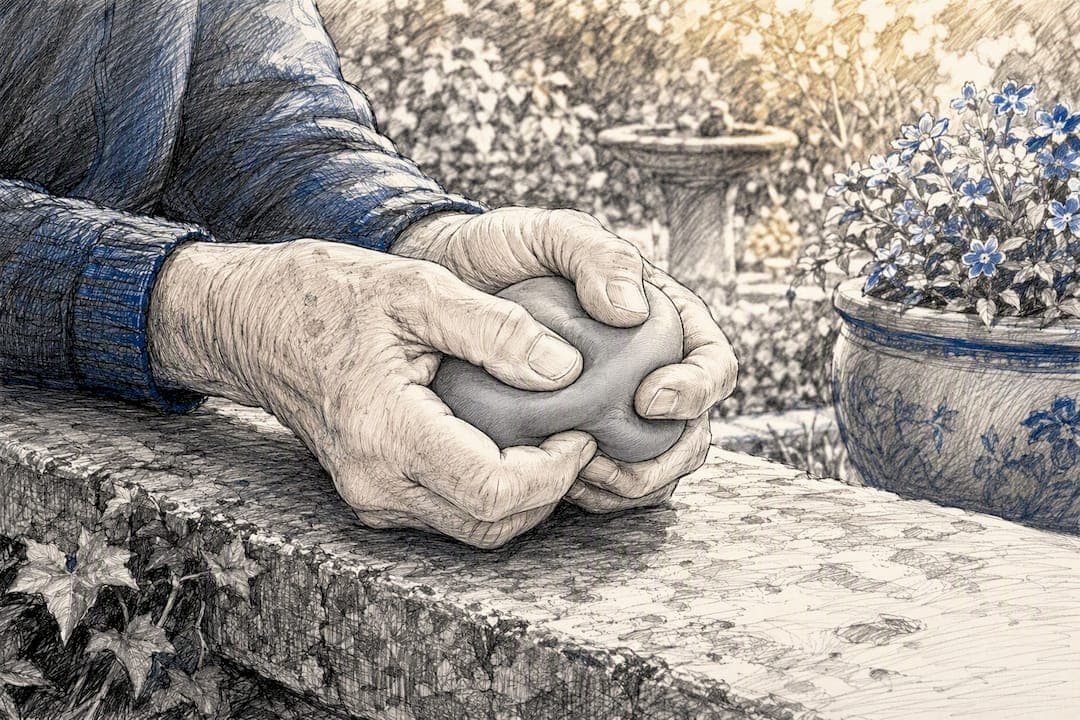
Yes. Most seniors can improve or maintain grip strength through brief, targeted exercises paired with objective measurement, and the gains often show up in everyday tasks within weeks. Two steps matter before anything else: get a baseline number, even from a simple squeeze test, and start two low-impact exercises right away.
Begin here:
- Take a baseline reading with a hand dynamometer, or self-check by squeezing a rolled towel or ball as hard as comfortably possible.
- Start therapy putty squeezes and wrist flexion exercises on alternating days.
- Recheck in four to six weeks to see whether the numbers moved.
Stop any exercise that causes sharp or new pain. If you've had recent hand or wrist surgery, have severe arthritis, or notice numbness or tingling, talk to a clinician before starting a program.
Key Takeaways
Grip strength for seniors responds reliably to consistent, low-impact training paired with objective measurement, and modest weekly effort produces trackable gains within four to six weeks.
| Point | Details |
|---|---|
| Measure before training | Get a baseline dynamometer reading or squeeze test before starting any exercise routine. |
| Start with two exercises | Therapy putty squeezes and wrist flexion cover the basics without special equipment. |
| Balance opening and closing | Pair grip-closing work with wrist extension to avoid flexor-dominant overuse strain. |
| Retest every 4 to 6 weeks | Compare trends over time rather than judging progress from a single session. |
| Track objectively with Dexdia | The DEXDIA GX dynamometer and app log sessions and flag asymmetry automatically for caregivers and clinicians. |
This article is general information, not a substitute for advice from a qualified doctor. Consult a qualified healthcare professional about your own circumstances before acting on anything here.
Table of Contents
- Why Grip Strength Matters for Seniors
- How Do You Measure Grip Strength Accurately?
- What Exercises Build Grip Strength Safely?
- Building a Safe Training Plan Without Overdoing It
- Everyday Tools That Help While Strength Improves
- Why Tracking Progress Matters More Than a Single Number
- Nutrition That Supports Muscle and Tendon Health
- Making Grip Training a Habit, Not a Chore
- Sources
Why Grip Strength Matters for Seniors
Grip strength is one of the few physical measurements that predicts far more than hand function alone. Researchers treat it as a biomarker for overall health because it correlates with frailty, bone density, mobility, and mortality risk in older adults, according to a comprehensive biomarker review. Decline typically starts around age 50, and research has found grip strength drops with age in men and women after that point.
That decline isn't abstract. It shows up in:
- Struggling to open jars, twist doorknobs, or grip stair railings securely
- Difficulty carrying groceries or grandchildren without dropping items
- Reduced ability to catch yourself during a stumble, which raises fall risk — a risk reduced by targeted balance training for seniors exercises designed to prevent falls
Weak grip strength is also linked to broader activity limitations that contribute to falls, a connection the CDC highlights in its older adult falls resources. Maintaining grip strength isn't about vanity or athletic performance. It's about keeping the hands capable of the small, constant tasks that make independent living possible.
How Do You Measure Grip Strength Accurately?
A hand dynamometer gives you an objective number instead of a vague impression of how strong your hands feel. That number matters because self-assessment is notoriously unreliable. Two people who both describe their grip as "pretty good" can differ by 15 kg or more once you actually test them.
The standard testing protocol is straightforward:
- Sit upright with your shoulder relaxed, elbow bent at 90 degrees, and forearm neutral (not twisted).
- Squeeze the dynamometer as hard as you can for two to three seconds.
- Repeat two to three times per hand, resting briefly between attempts.
- Record the highest reading for each hand, not the average.
- Compare left and right hand results to check for asymmetry.
Consistent positioning matters more than most people realize. Clinical measurement guidance for handgrip dynamometry recommends standardized seating and elbow position specifically because small posture changes can shift readings by several kilograms, which would otherwise look like real progress or regression.
Once you have a number, compare it to normative grip strength data by age and sex. Population studies show men typically peak around 49 kg (plus or minus 10 kg) near age 24, while women peak around 29 kg (plus or minus 5.6 kg) near age 29, with values holding relatively steady until the early 40s before declining, according to normative reference research. Large-sample norms specific to ages 50 to 89 are also available for more precise comparison.
Pro Tip: Use the same dynamometer and the same seated position every time you retest. Switching devices or posture between sessions can make a real strength gain look like no progress at all.
Contact a clinician if one hand tests dramatically weaker than the other, or if you experience a sudden, unexplained drop in strength between tests. Both can signal something beyond ordinary age-related decline.
What Exercises Build Grip Strength Safely?
You don't need a gym membership or specialized equipment to see measurable improvement. A systematic review and meta-analysis of hand-focused training found that strength-focused protocols produced notably larger effects in older adults (an effect size of 0.97) compared with younger adults (0.18), meaning seniors tend to respond especially well to this kind of targeted work.
Here's a simple, prioritized sequence:
- Therapy putty squeezes. Choose a soft to medium resistance putty. Squeeze fully closed, hold for two seconds, release. Add a three-point pinch (thumb against index and middle finger) once basic squeezes feel easy.
- Wrist flexion and extension. Rest your forearm on a table, wrist hanging off the edge, holding a 1 to 3 lb weight. Curl your wrist up, then let it lower slowly. This range matters because grip strength depends on forearm muscles, not just the fingers.
- Supination and pronation. Hold a light weight or a hammer-shaped object and rotate your forearm palm-up, then palm-down. This targets the rotational muscles you use turning keys and doorknobs.
- Functional holds. Practice holding a filled jar or a light grocery bag for 10 to 15 seconds at a time, gradually increasing duration as it feels manageable.
Harvard Health recommends starting with one set of 10 repetitions per exercise every other day, then building toward two or three sets as strength improves. Once the current routine feels easy, add resistance in small increments (heavier putty, a slightly heavier dumbbell) or extend hold times rather than doing more repetitions.
If arthritis is part of the picture, don't try to push through joint pain to build strength. Reduce resistance substantially and prioritize pain-free range of motion first. Strength gains can follow once the joint tolerates movement without flaring.
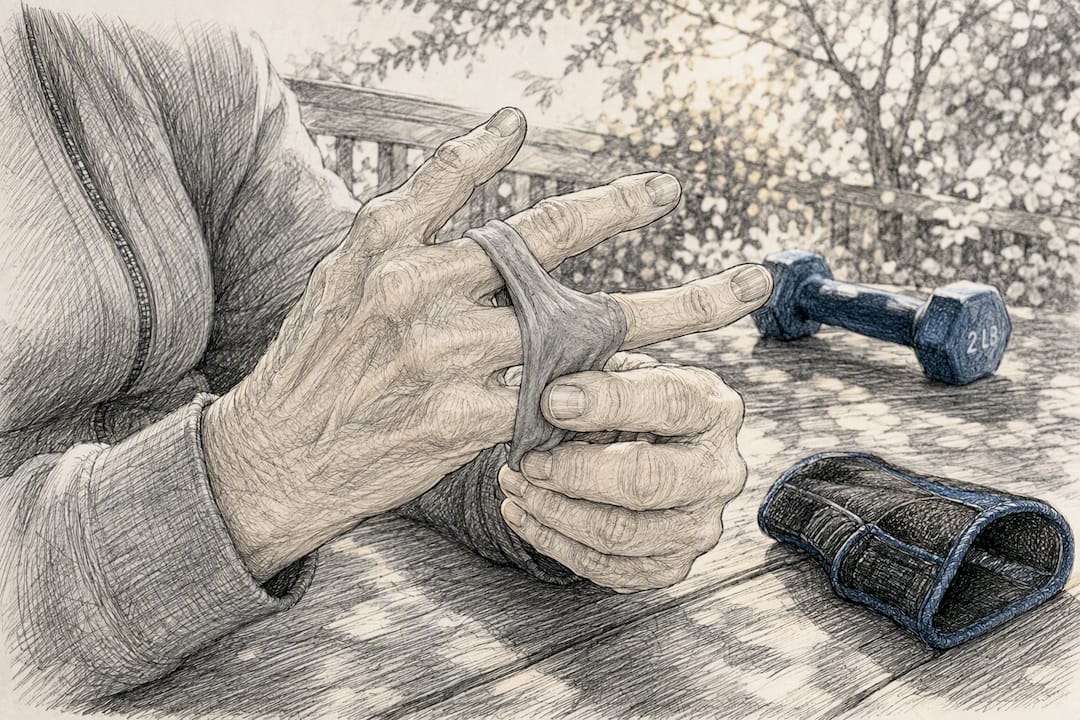
Pro Tip: Alternate grip-closing exercises with finger-opening or extension exercises. Training only the "squeezing" muscles while ignoring the opposing muscles that open the hand is a common mistake that can lead to imbalance and overuse strain over time.
Building a Safe Training Plan Without Overdoing It
A structured but modest schedule works better than sporadic effort. An 8-week plan built around two to three sessions per week, with rest days between, gives muscles and tendons time to adapt. A pilot study on a 12-week handgrip training program in older adults reported measurable improvement in grip strength and function following a similarly structured, supervised protocol. Retest at week four and again at week six to gauge whether the plan is working.
Watch for these warning signs that mean it's time to back off:
- Sharp pain that increases during or after exercises, rather than the mild, expected fatigue
- Swelling in the wrist, palm, or fingers that doesn't resolve within a day
- Progressive weakness instead of the expected gradual improvement
Certain conditions call for slower progression and closer supervision. If you've had recent hand or wrist surgery, live with severe osteoarthritis, or have peripheral neuropathy affecting sensation in the hands, work with a physical or occupational therapist rather than following a generic plan. They can adjust resistance and range of motion to your specific limitations, and they'll catch problems earlier than a self-guided routine would.
Anyone training grip strength daily with high-intensity crushing exercises risks flexor-dominant overuse, since the muscles that close the hand get worked far more than the ones that open it. Balancing crushing work with extension exercises isn't optional if you want to avoid tendon irritation down the line.
Everyday Tools That Help While Strength Improves
Building strength takes weeks, but daily tasks don't wait. Assistive devices bridge that gap without creating dependence, as long as you choose tools that support rather than replace effort entirely.
Useful options include:
- Jar openers and jar keys for stubborn lids
- Electric can openers, which eliminate a common grip and wrist strain point
- Rocker knives that reduce the grip force needed to cut food
- Nonslip mats and grip-assist gloves for tasks requiring sustained hold
- Ergonomic, larger-handled utensils that reduce pinch-grip demand
Choose devices that reduce unnecessary strain rather than ones that make you rely on compensatory movements elsewhere, like twisting your wrist awkwardly to avoid using your fingers. The goal is preserved independence, not permanent workaround.
Why Tracking Progress Matters More Than a Single Number
One grip strength reading tells you very little. A trend line over weeks or months tells you whether training is actually working, and whether left and right hand strength are staying balanced. Reviewing symmetry and trends over time helps detect plateaus or asymmetries early, which allows a clinician or trainer to adjust the plan before a small imbalance becomes a bigger problem.
A Bluetooth-connected dynamometer paired with a mobile app speeds up this process considerably. Instead of writing numbers on paper and trying to remember last month's result, the app logs each session automatically and builds the trend for you.
A workable routine looks like this:
- Measure a baseline for both hands before starting any program.
- Log every training session, even short ones, in the same app or notebook.
- Review the trend monthly rather than obsessing over single-day fluctuations.
- Share the data with a physical therapist or physician if six weeks pass with no improvement.
Pro Tip: A single low reading on a bad day means very little. It's the trend across four to six weeks, not one session, that tells you whether a program is actually working.
Nutrition That Supports Muscle and Tendon Health
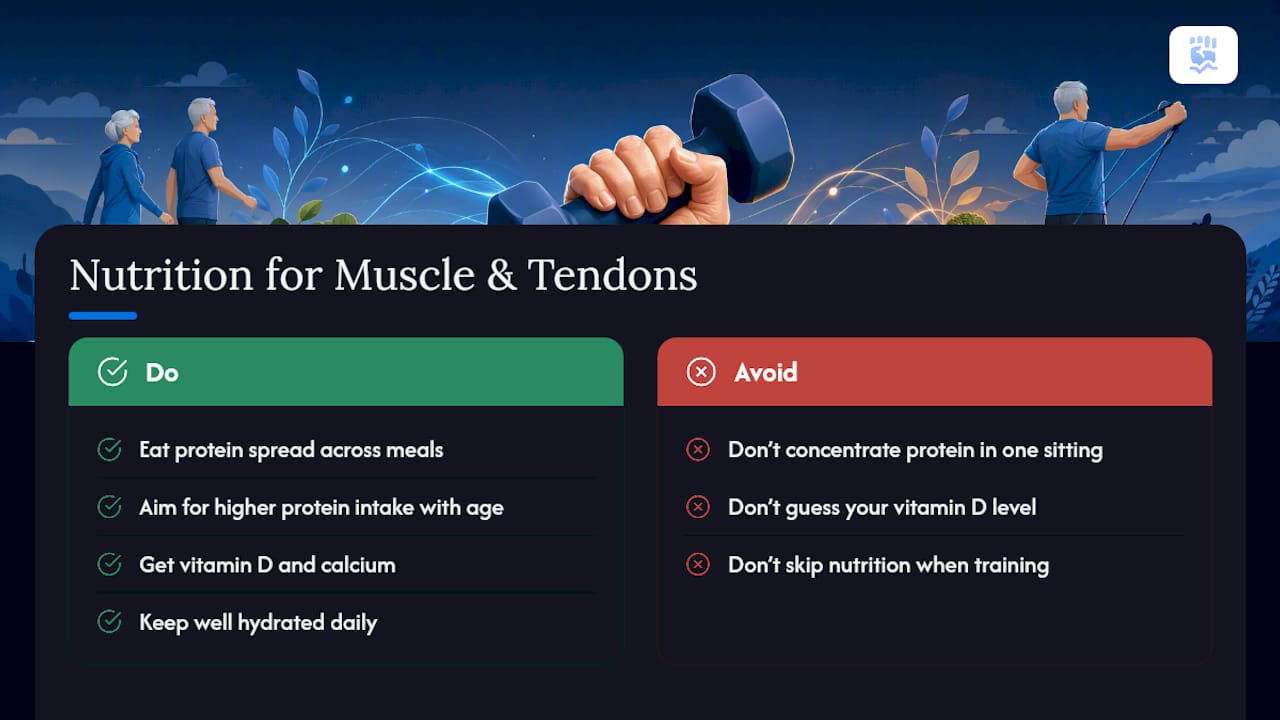
Exercise builds the demand for stronger muscles and tendons, but nutrition supplies the raw material to meet it. Protein intake matters most directly. Older adults often need more protein per pound of body weight than younger adults to counteract age-related muscle loss, commonly called sarcopenia, which affects grip strength along with the rest of the body's musculature. Lean meats, fish, eggs, dairy, and legumes spread across meals, rather than concentrated in one sitting, tend to support muscle maintenance more effectively than a single large protein serving.
Vitamin D and calcium support the bone density that grip strength itself is linked to, since strong tendons and ligaments anchor to bone that needs to stay dense enough to bear load. Many seniors run low on vitamin D, particularly with limited sun exposure, so it's worth discussing levels with a physician rather than guessing.
Hydration plays a quieter but real role. Tendons and connective tissue rely on adequate fluid balance to stay pliable, and dehydration can make joints feel stiffer and grip exercises feel harder than they should.
Omega-3 fatty acids, found in fatty fish, walnuts, and flaxseed, are commonly associated with reduced inflammation, which can matter for anyone dealing with arthritis-related hand pain during training. None of this replaces exercise. Nutrition supports the tissue that training is trying to strengthen, and skipping it can blunt otherwise solid effort in the gym or at the kitchen table with a jar of putty.
Making Grip Training a Habit, Not a Chore
The exercises that get done consistently are the ones woven into routines you already have, not the ones that require a separate calendar block. Squeeze therapy putty while watching the evening news. Do wrist curls during commercial breaks or while a phone call is on speaker. Practice supination and pronation while waiting for coffee to brew.
Everyday tasks double as functional practice when you approach them deliberately. Carrying a grocery bag one trip longer than necessary, opening jars by hand before reaching for a jar key, or gripping a cane or walker handle with slightly more intention all reinforce the same muscles the formal exercises target. This is what turns isolated exercise gains into real-world carryover, since the goal was never a higher dynamometer number in isolation, but a hand that works better at the sink, the stairs, and the car door.
Pairing exercises with an existing habit, sometimes called habit stacking, tends to produce far better adherence than a standalone routine that competes for a dedicated time slot. Caregivers can help by keeping putty or light dumbbells visible on a kitchen counter or by a favorite chair, since visible cues matter more than most people expect. A drawer full of good intentions rarely gets opened.
Consistency over months, not intensity in any single session, is what produces the kind of steady improvement documented in structured training research. A skipped day here or there won't undo progress. Weeks of skipped days will.
Dexdia Team Perspective: Realistic Expectations and Encouragement
Working from the measurement research behind grip strength assessment, one pattern stands out: people overestimate how hard training needs to be and underestimate how much a consistent, modest routine changes over six weeks. Start small. Measure honestly. Let the numbers, not how your hands feel on any given day, tell you whether it's working.
Turning Measurement Into a Habit With DEXDIA GX
Most of the guidance above works better with real numbers behind it, and that's the gap DEXDIA GX was built to close. It's a Bluetooth-enabled hand dynamometer that pairs with a mobile app to record each squeeze test automatically, compare results against age and sex norms, and flag left-right asymmetry without you having to do the math yourself.
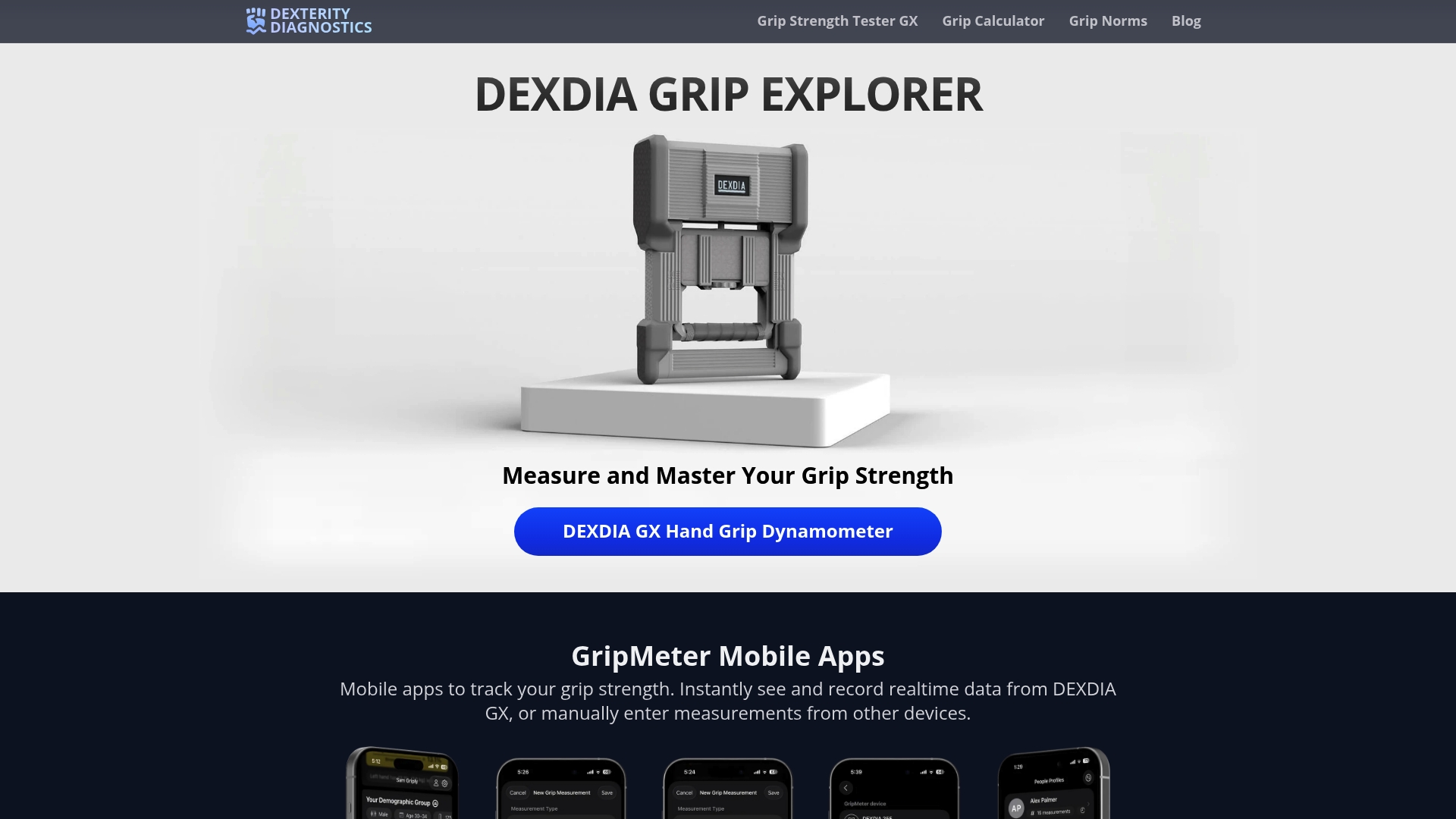
You don't need to buy hardware to get started. Try the free Grip Strength Calculator to see how a manual reading compares to normative data for your age group, or download the printable grip strength norms to keep a reference sheet on hand for at-home checks. If tracking by hand starts feeling tedious, or if a caregiver wants a clean record to share with a physical therapist, the DEXDIA GX tester automates that entire process and builds the trend line for you. Start with the free calculator today and see where your current numbers land.
Sources
- Grip Strength: An Indispensable Biomarker For Older Adults - PMC
- Forearm workouts: Strengthening grip for everyday function - Harvard Health