
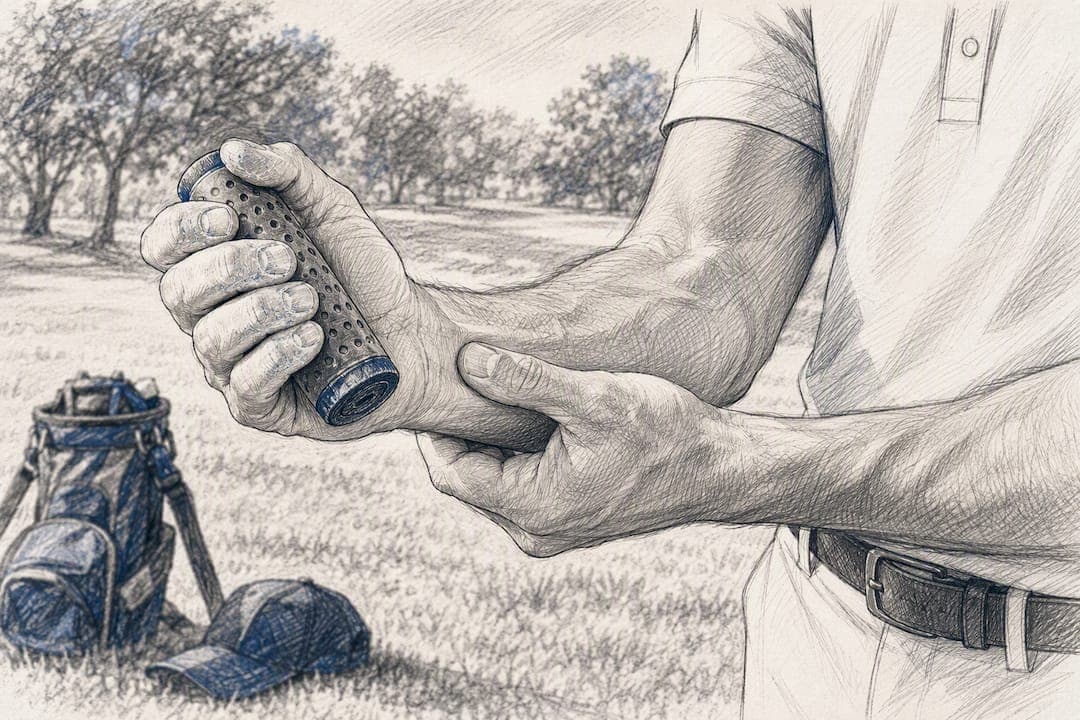
Grip strength governs how well you retain the club through impact, how efficiently you release the clubhead, and how much force you can transfer into the swing. Before changing your technique, test your grip strength.
Two quick tests get you a baseline today:
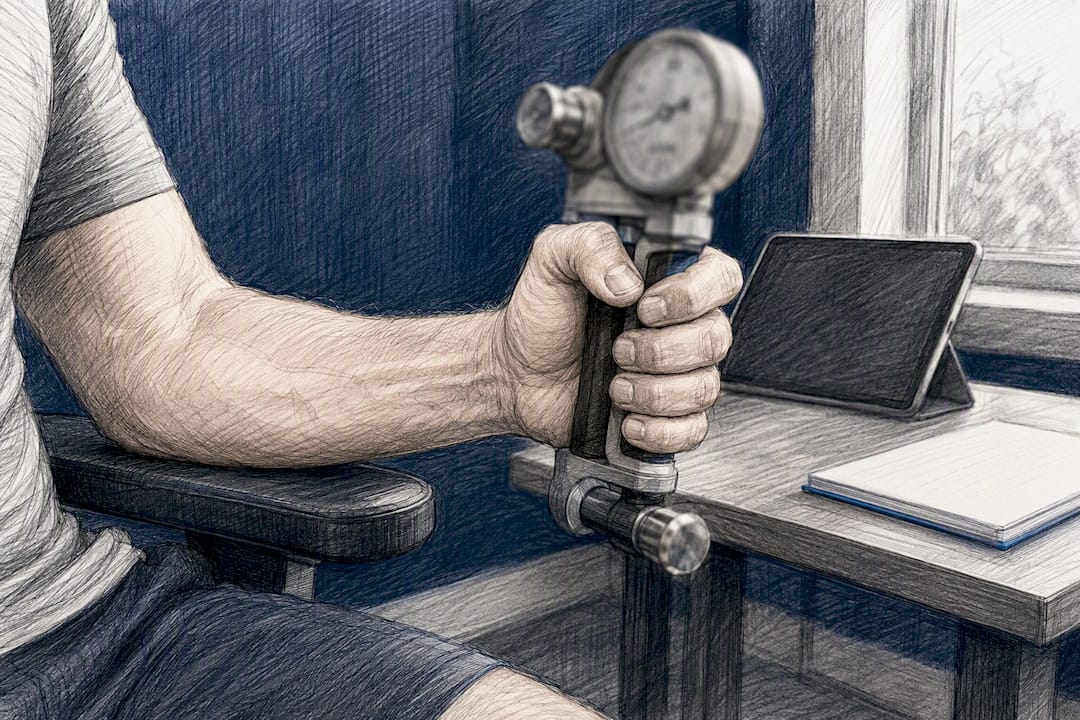
- A hand dynamometer squeeze test (three trials per hand, seated, elbow at 90 degrees).
- An on-course check: grip a club at address and note where tension creeps in during a slow takeaway.
Then act on the numbers:
- Record both hands, note the stronger side.
- Compare your result to normative ranges for your level.
- Start a short, progressive training block and retest in 6 to 8 weeks.
Key Takeaways
Grip strength supports club control and release, but training it effectively requires consistent measurement before and after any program.
| Point | Details |
|---|---|
| Test before you train | Use a Jamar-protocol dynamometer, three trials per hand, before changing any technique. |
| Know your benchmark | Amateurs often measure near 100 lb; tour pros commonly exceed 130 lb of grip force. |
| Strength isn't the only limiter | Golfers use roughly half of their maximal pulling capacity during an actual swing, per research on clubhead speed. |
| Track symmetry, not just totals | Non-dominant hands measured stronger by 2.28 kg on average in one study of pro golfers. |
| Use connected tools for trends | The DEXDIA GX logs every session automatically, making left/right symmetry and progress easier to track over 8 to 12 weeks. |
Table of Contents
- Why Grip Strength Affects Distance, Control, and Consistency
- How to Measure Golf Grip Strength Correctly
- How Strong Should a Golfer's Grip Be?
- Exercises That Build Grip Strength for Golf
- Drills That Transfer Strength Gains to Your Swing
- How Long Until You See Results, and What to Avoid
- How Connected Testing Tools Improve Tracking Accuracy
- Get a Repeatable Way to Test and Track Your Grip
- Sources
Why Grip Strength Affects Distance, Control, and Consistency
Grip strength determines how much friction you can generate between your hands and the club, which controls whether the club stays put during the violent deceleration and re-acceleration of transition. Weak grip strength forces compensations, most often an early or defensive release that bleeds clubhead speed. SuperSpeed's coaching data shows a consistent correlation between grip strength and swing speed across pros, long-drive competitors, and amateurs, and their short fat-grip training protocols produced measurable speed gains in some early tests.
Grip strength is not the whole story, though. Research measuring grip force during an actual golf shot found that each golfer produces a repeatable, individual force signature through the swing rather than one static number. That distinction matters for how you train: raw squeeze strength builds capacity, but the swing demands phase-specific timing, not just brute force.
How to Measure Golf Grip Strength Correctly
The gold-standard tool is a hand dynamometer using the Jamar protocol: seated, shoulder adducted, elbow flexed at 90 degrees, wrist neutral. Perform three trials per hand, resting 30 to 60 seconds between squeezes, and record the average rather than the single best effort. Test the dominant and non-dominant hand separately. A study of professional golfers using this exact protocol found the non-dominant hand was, on average, 2.28 kg stronger than the dominant hand, a detail worth tracking rather than dismissing as noise.
Field alternatives exist. Pressure-sensitive grips and glove sensors capture dynamic force traces through the actual swing, which a static dynamometer cannot. They're useful for coaches who want the full picture, but they cost more and require setup that most golfers won't bother with at home.
| Variable | What to Record |
|---|---|
| Hand tested | Dominant / non-dominant |
| Trial number | 1, 2, 3 |
| Reading | kg or lb |
| Date and time | Same time of day each session |
| Notes | Warm-up status, grip size used |
To measure consistently, test at the same time of day, use the same dynamometer handle setting, and warm up your forearms first. A device like the DEXDIA GX automates this logging through its app, which removes the manual spreadsheet step most golfers abandon after two weeks.
Pro Tip: Test both hands every session, even if you only care about your lead hand. Symmetry trends often reveal overuse patterns before pain does.
How Strong Should a Golfer's Grip Be?
Interpreting your number requires context. Golf Digest's summary of TPI field testing found tour pros often exceed a high level of grip force, while many amateurs measured in event testing land at a noticeably lower level. That gap is real, but it's not the full determinant of speed.
A thesis examining whether grip strength limits clubhead speed found golfers use roughly half of their maximal pulling capacity during an actual swing. In plain terms: you likely have more raw strength available than your swing calls on. That undercuts the old "hold it like a bird" cue for many players. It's a valid feel for elite athletes with high strength reserves, but for a golfer sitting near or below the 100 lb mark, more grip capacity often buys more usable control, not more tension.
- If you test well below 100 lb: prioritize strength.
- If you test above 120 lb but still lose the club in transition: prioritize technique and release timing.
- If your two hands differ by more than a few kilograms: prioritize symmetry work before adding load.
Exercises That Build Grip Strength for Golf
Strength gains come from a mix of holds, pulls, and targeted wrist work, not endless crushing grippers alone. PGA fitness guidance and TPI's technique recommendations both point toward compound, sport-specific movements over isolated squeezing.
Build your program around these:
- Farmer's carries (heavy dumbbells or trap bar, 30 to 40 yards).
- Dead-hangs from a pull-up bar (accumulate 60 to 90 seconds).
- Wrist curls and reverse wrist curls with a barbell or dumbbell.
- Hand grippers for direct crush-strength work.
- Fat-grip attachments on your existing lifts (pull-ups, rows, curls).
A sensible 8 to 12 week progression for a beginner or intermediate golfer: two sessions per week, starting with 3 sets of 20 to 30 second holds and 8 to 10 reps on wrist work, adding load or duration every two weeks. National Club Golfer's exercise demonstrations and forearm-specific progressions from Gripnatic offer good visual references if you're building this at home.
Warm up wrists and forearms before every session, and don't chase soreness. Tendons adapt slower than muscle, so progressive overload should be gradual, especially past week 6.
Pro Tip: Alternate two-hand fat-grip work with single-hand isometric holds. The single-hand variation exposes side-to-side imbalances a two-hand exercise will always mask.
Drills That Transfer Strength Gains to Your Swing
Raw strength only helps if it shows up at impact. Swing a slightly heavier club for 10 slow-motion reps before your regular practice to build feel for controlled tension through transition. Follow with single-hand swings, lead hand only, focusing on a full release rather than a death grip.
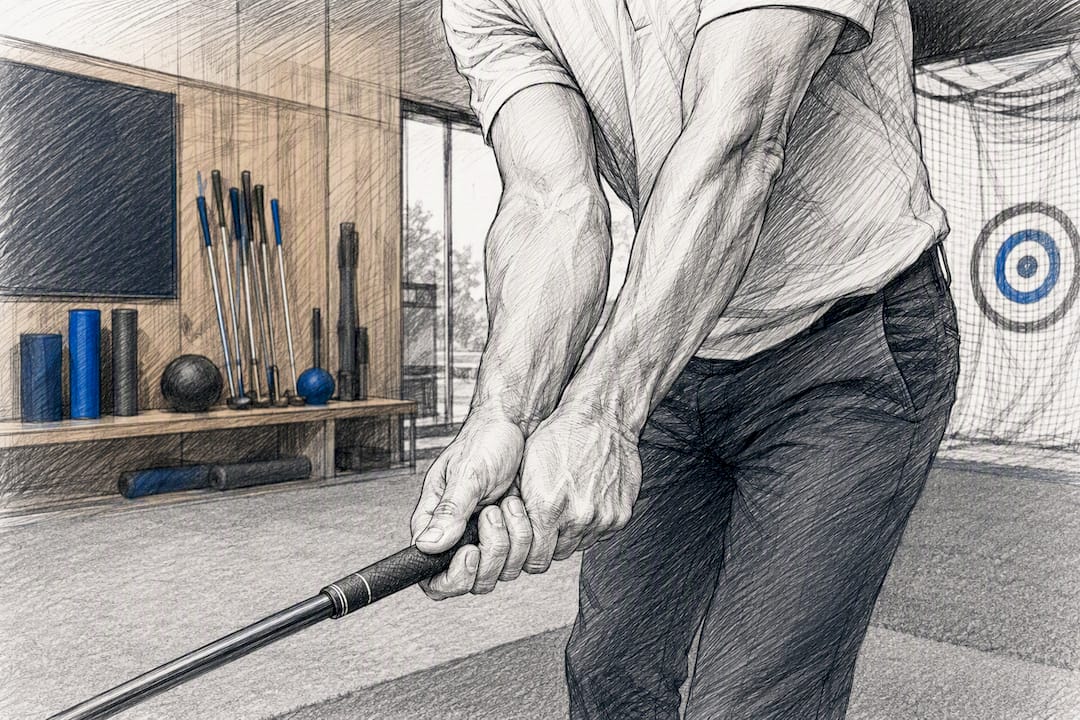
For on-course transfer, hit 10 short-game control swings with deliberate hold-and-finish positions, checking that your grip pressure stays consistent from address to follow-through rather than spiking at impact. Coaches at SuperSpeed note that golfers with low maximal grip strength tend to compensate with an early release, so these drills should feel like you're releasing later, not gripping harder.
Pro Tip: Keep tension at a 5 out of 10 during these drills. Anything higher recreates the "death grip" the drill is meant to fix.
How Long Until You See Results, and What to Avoid
Expect early neuromuscular improvements, better coordination and grip endurance, within 3 to 4 weeks. Measurable strength gains on a dynamometer typically show up between 6 and 12 weeks of consistent training.
Common mistakes that stall progress:
- Training only maximal squeezes and skipping holds or pulls.
- Ignoring the weaker hand until an imbalance shows up as pain. The 2.28 kg non-dominant advantage found in professional golfers is a reminder that asymmetry is normal, but tracking it matters.
- Carrying gym tension into the full swing instead of releasing it.
- Skipping recovery days between grip-intensive sessions.
See a physical therapist or hand specialist if you notice persistent pain, a growing asymmetry between hands, or no progress after a full 12 week block.
How Connected Testing Tools Improve Tracking Accuracy
Manual dynamometer testing works, but it's easy to record inconsistently, different times of day, different warm-up states, different handle settings, which adds noise to your trend line. A repeatable testing protocol matters precisely because grip force signatures are individual; without consistent conditions, you can't tell a real change from measurement error.
Bluetooth-connected dynamometers like the DEXDIA GX log every trial automatically, timestamp each session, and flag left/right symmetry trends over weeks or months, turning a single test into a usable dataset rather than a one-off number.
Coaches and clinics use this for baseline testing, pre and post program comparisons, and ongoing asymmetry monitoring across a roster of athletes.
Pro Tip: If you coach multiple golfers, standardize the testing time of day across your whole group. It removes one of the biggest sources of inconsistent data.
Testing beats guessing
We've seen too many golfers change their setup based on feel alone. Test first, train with intent, then retest. That loop, not another swing tip, is what actually moves the number.
Get a Repeatable Way to Test and Track Your Grip
Coaches, serious golfers, and clinics all run into the same wall with manual testing: it's inconsistent, hard to log over time, and nearly impossible to compare against real norms without a spreadsheet habit most people abandon. The DEXDIA GX solves that by pairing a Bluetooth dynamometer with an app that timestamps every trial, tracks left/right symmetry automatically, and builds your trend line for you.
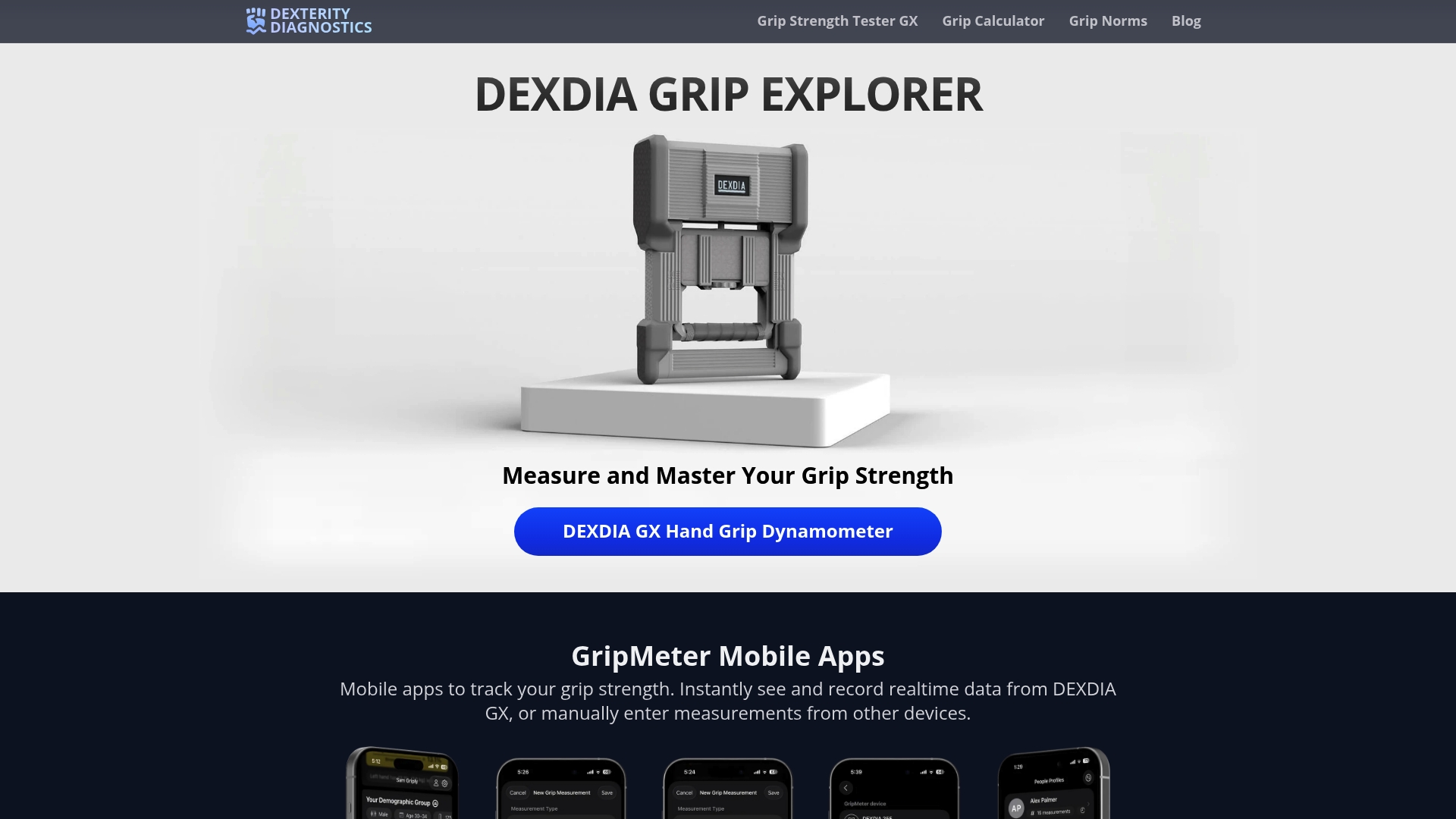
It's built for anyone serious about the numbers behind their swing, not just casual curiosity. If you've just tested and want to see where you stand, run your result through the grip strength calculator or check the full normative charts by age and height before committing to a device. When you're ready for repeatable, app-tracked testing, the DEXDIA GX page has the full protocol and specs to get started.
Sources
- Measurement and analysis of grip force during a golf shot
- Is grip strength a limiting factor in the generation of clubhead speed?
- Grip Strength Correlations to Speed
- Differences In Dominant And Non-Dominant Handgrip Strength Of Male Golf Professionals Measured Using The Jamar Dynamometer